Examining Synchronization Patterns Between Inventory Systems and Supplier Invoicing in Retail Supply Chains
Ines Hoffmann · Sep 26, 2026
Examining Synchronization Patterns Between Inventory Systems and Supplier Invoicing in Retail Supply Chains
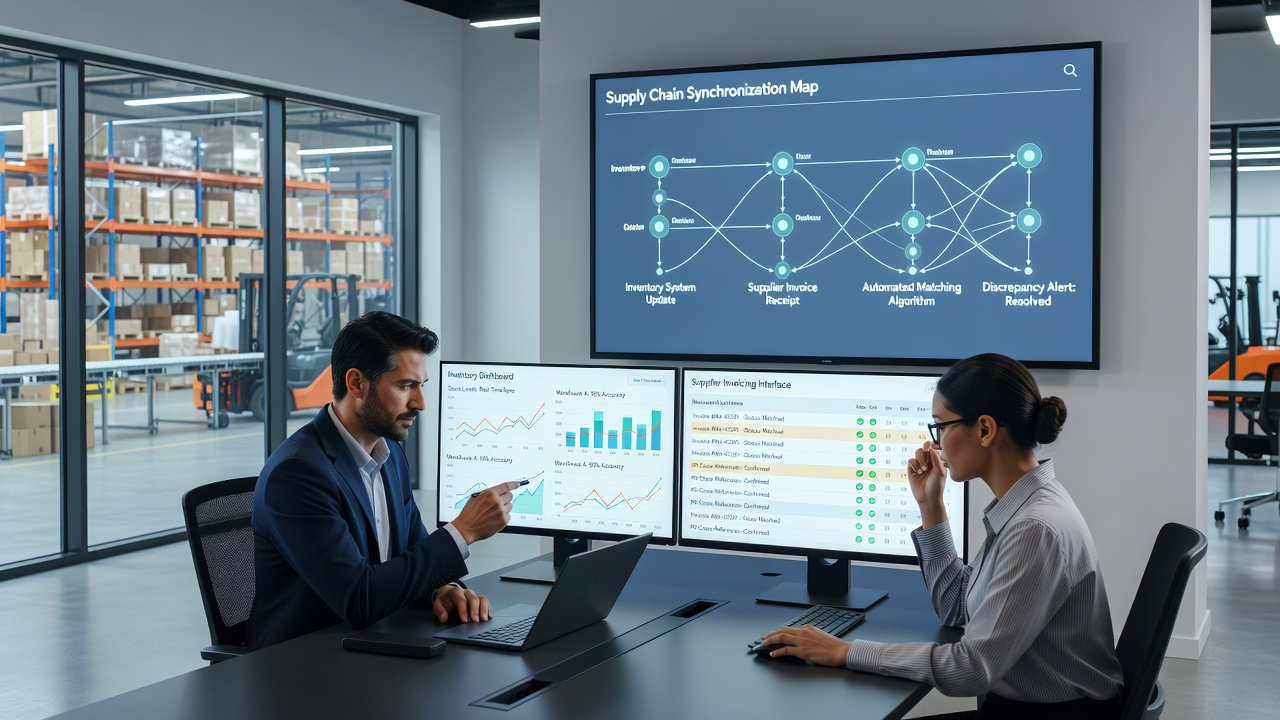
Retail supply chains rely on precise coordination between inventory management platforms and supplier invoicing processes, where mismatches often lead to payment delays or stock discrepancies. Data from multiple industry analyses shows that automated synchronization reduces these errors by aligning stock records with incoming bills in near real time. Researchers tracking retail operations across North America and Europe note that systems using electronic data interchange protocols achieve higher accuracy rates when inventory updates trigger automatic invoice validations. Three-way matching remains a core mechanism in this area, where purchase orders, delivery receipts, and supplier invoices must align before payments process. Studies from 2025 indicate that retailers adopting integrated ERP solutions see fewer manual interventions, particularly during high-volume periods such as holiday restocking cycles. In September 2026, several major chains reported deploying AI-driven reconciliation tools that flag variances exceeding predefined thresholds, allowing staff to address issues before they escalate into cash flow disruptions.Core Components of Inventory and Invoicing Alignment
Inventory systems capture stock levels through barcode scans, RFID tags, and warehouse sensors, while supplier invoicing platforms handle billing details including unit prices, quantities, and tax calculations. Synchronization occurs when these platforms exchange data via APIs or middleware, ensuring that a received shipment immediately updates both records. Observers note that this integration prevents over-ordering or duplicate payments, especially in multi-supplier environments where one retailer might source products from dozens of vendors simultaneously.
Retailers often implement rule-based engines that cross-reference invoice line items against current inventory data, rejecting entries that fall outside accepted variance ranges. According to findings from the National Retail Federation, organizations using such automated checks processed invoices 40 percent faster than those relying on manual reviews. European retailers have adopted similar frameworks under digital single market initiatives, where standardized data formats further streamline cross-border supplier interactions.
Observed Patterns in Operational Data
Analysis of transaction logs reveals recurring patterns, including seasonal spikes in synchronization events during back-to-school promotions or end-of-quarter inventory audits. Retailers in Australia and Canada demonstrate that cloud-based platforms handling both inventory and invoicing reduce latency compared with legacy on-premise setups. One study tracking mid-sized grocery chains found that real-time syncing cut invoice disputes by nearly a third over a twelve-month period ending in mid-2026.

Batch processing versus continuous synchronization presents another notable distinction. Continuous models update records instantly upon goods receipt, whereas batch approaches aggregate changes overnight. Data indicates continuous models suit high-turnover categories such as perishables, while batch methods remain common for durable goods where immediate accuracy carries less urgency. Those who examined these patterns across different retail formats report that hybrid approaches, blending both methods, often yield the most consistent results in practice.
Technology Enablers and Integration Challenges
Modern synchronization relies on standardized protocols such as EDI, XML, and increasingly blockchain-based ledgers that create immutable audit trails. Retailers integrating these tools with supplier portals allow vendors to view inventory positions directly, which supports just-in-time replenishment without separate invoicing cycles. Yet compatibility issues arise when suppliers use disparate software versions, forcing manual data mapping that introduces delays.
Security considerations also shape these patterns, since shared data streams between inventory and invoicing systems require encryption and access controls. Reports from research institutions in Asia highlight how token-based authentication reduces unauthorized access incidents during high-frequency data exchanges. Retail operations in September 2026 increasingly incorporate predictive analytics that forecast potential mismatches based on historical supplier performance, enabling proactive adjustments before invoices arrive.
Impact on Financial and Operational Metrics
Accurate synchronization directly influences working capital management because faster invoice validation accelerates payment cycles and preserves supplier relationships. Retailers maintaining tight alignment report lower carrying costs for excess inventory and reduced write-offs from unclaimed credits. Figures from academic reviews of North American supply chains show that each percentage point improvement in matching accuracy correlates with measurable reductions in administrative overhead.
Case examples include a European fashion retailer that linked its inventory system to supplier invoicing through a unified dashboard, resulting in fewer stockouts during peak seasons. Similar implementations in Canadian hardware chains demonstrate how exception reporting directs attention only to mismatched entries rather than reviewing every transaction. These approaches free personnel to focus on strategic tasks instead of routine reconciliations.
Conclusion
Patterns in synchronization between inventory systems and supplier invoicing continue to evolve as retail supply chains adopt more connected technologies. Evidence from multiple regions shows that automated alignment improves accuracy, speeds processing, and supports better cash flow management. Organizations that maintain these connections through standardized protocols and continuous monitoring position themselves to handle increasing transaction volumes without proportional growth in errors or disputes. Future developments will likely center on deeper integration of predictive tools that anticipate discrepancies before they affect operations.