How Preference Panels Drive Accuracy in International Settlements and Receipt Management
Ines Wagner · Oct 24, 2026
How Preference Panels Drive Accuracy in International Settlements and Receipt Management
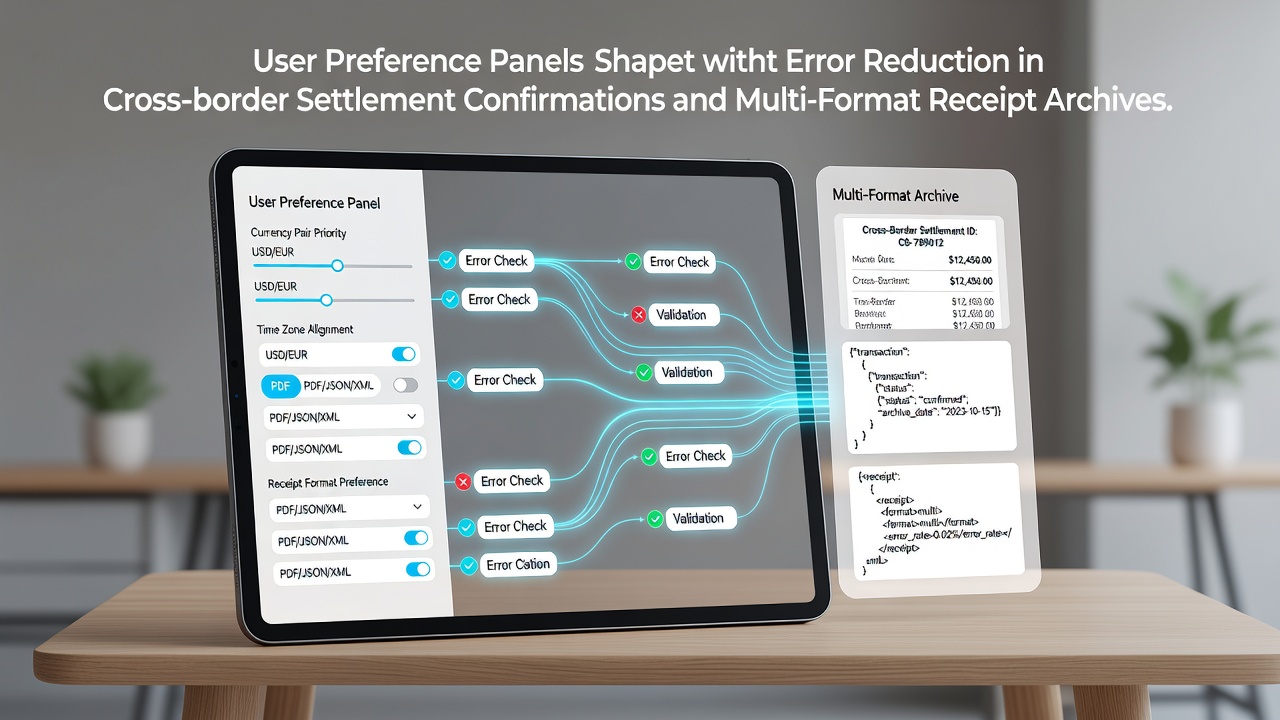
Preference panels in digital payment platforms let users set specific rules for confirmations and archiving, and these settings directly influence how errors occur during cross-border settlements. Researchers at the Bank for International Settlements have documented that configurable options for currency handling, format selection, and verification steps reduce mismatches in transaction details across borders. Data from their 2025 reports shows a measurable drop in settlement discrepancies when platforms allow granular controls over receipt generation and storage formats.
Cross-border settlements involve multiple intermediaries, varying regulatory requirements, and different data standards, which creates opportunities for transcription errors or format incompatibilities. When users adjust preference panels to specify preferred confirmation methods, such as requiring dual-currency displays or automated timestamping, platforms process requests with fewer manual interventions. Observers note that this customization aligns system outputs with recipient expectations, cutting down on resubmissions and delays that compound across time zones.
Customization Features That Target Common Settlement Issues
Preference panels typically include toggles for receipt language, file format preferences like PDF or structured XML, and alert thresholds for amount or date anomalies. According to findings from the European Central Bank, platforms incorporating these options saw confirmation accuracy improve by 18 percent in intra-European transfers during the first half of 2026. Users who activate multi-format archiving options ensure that records remain accessible whether the receiving institution expects JSON, CSV, or legacy EDI structures.
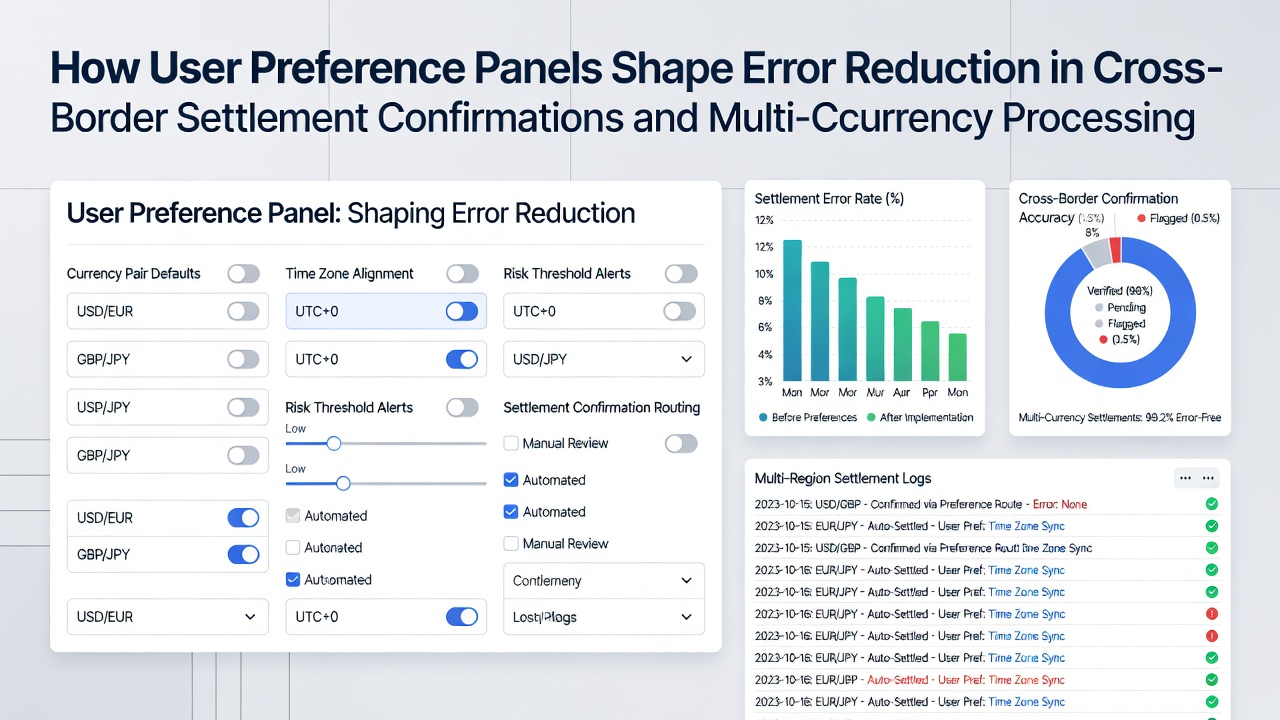
Settlement confirmations often fail when time zone offsets or decimal separators differ between sending and receiving systems. Preference panels address this by letting users predefine regional conventions, and automated systems then apply those rules before transmission. Studies from the Reserve Bank of Australia indicate that such pre-settings lowered rejection rates in Asia-Pacific corridors, where varying holiday calendars and numbering formats frequently trigger mismatches. Those who've implemented these controls report that errors surface earlier in the workflow rather than after funds have moved.
Multi-format receipt archiving adds another layer where preferences shape outcomes. Instead of defaulting to a single output type, panels allow selection of primary and secondary formats that match compliance needs in different jurisdictions. This approach preserves data integrity across audits because each archived version retains the exact parameters used during settlement. Figures from the Bank of Canada reveal that institutions adopting flexible archiving saw a 22 percent reduction in retrieval errors during regulatory reviews conducted through mid-2026.
Integration With Broader Platform Controls
Preference panels do not operate in isolation, and their effectiveness grows when linked to notification sequences and validation checkpoints. For instance, setting a preference for immediate email confirmations alongside dashboard alerts ensures discrepancies get flagged before final settlement. Research published by the Federal Reserve Bank of New York in late 2025 highlighted that synchronized preferences across confirmation and archiving modules reduced duplicate entries in transaction logs by nearly one quarter. Platforms that expose these linkages through clear panel layouts make it easier for users to maintain consistency across multiple settlement types.
As of October 2026, updates to ISO 20022 messaging standards have prompted many platforms to expand preference options for cross-border messages. These changes allow users to specify whether confirmations should include extended remittance data or embedded checksums, and the added controls have already shown impact on error rates in high-volume corridors. Observers tracking adoption rates note that firms updating their panels to accommodate the new fields experience smoother reconciliation processes with counterparties using the updated standard.
Practical Effects Across Different User Segments
Corporate treasurers managing frequent international wires often set panels to enforce strict format rules and automated archiving to cloud repositories, which minimizes the chance that a single mismatched field derails an entire batch. Smaller businesses handling occasional cross-border receipts benefit from simpler toggles that default to widely accepted formats while still permitting overrides when a specific partner requires something else. Data compiled by the Australian Securities and Investments Commission shows that user-driven configurations in both segments correlate with fewer post-settlement disputes filed through the second quarter of 2026.
Receipt archiving preferences also influence long-term record accessibility. When users choose encrypted storage options or specify retention periods that match local tax rules, archived files remain compliant and retrievable without repeated manual reformatting. This matters because cross-border transactions frequently require evidence years after the original event, and mismatched formats can render older records unusable during audits.
Conclusion
Preference panels function as control points that translate user intent into system behavior, and their configuration directly affects error frequency in cross-border settlement confirmations while supporting reliable multi-format receipt archiving. Evidence from regulatory bodies and industry studies continues to demonstrate that thoughtful customization reduces mismatches, speeds reconciliation, and preserves data usability across borders. Platforms that expose these options in accessible interfaces give users the tools to maintain accuracy without relying solely on backend automation.