Interface Preferences Guiding Currency Conversion Precision Across Worldwide Remittance Applications
Viktor Powell · Oct 10, 2026
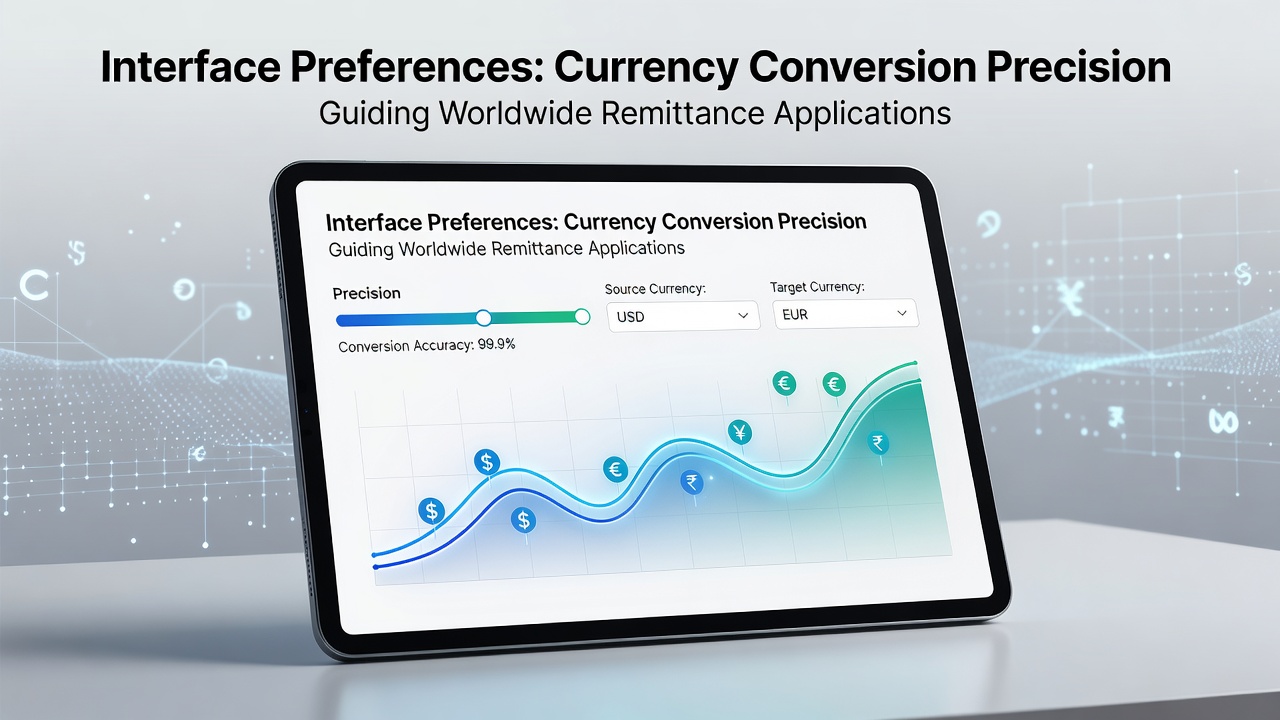
Interface Preferences Guiding Currency Conversion Precision Across Worldwide Remittance Applications
Interface preferences in remittance applications determine how currency conversion calculations display and execute, with users selecting options that control decimal precision, rounding methods, and rate update frequencies. These settings operate through backend algorithms that align with international financial standards, and developers integrate them so that each transaction reflects the selected parameters without deviation.
Core Mechanisms of Preference Configuration
Users access menus where they adjust the number of decimal places shown for converted amounts, choose between banker's rounding or standard half-up methods, and set thresholds for rate refresh intervals. Such choices feed directly into the conversion engine, where a preference for four decimal places triggers extended floating-point handling that preserves accuracy across multiple currency pairs. Observers note that platforms synchronize these user inputs with real-time data feeds from providers like central banks, ensuring the selected precision level applies uniformly to every calculation step.
Regional Standards Influencing Precision Controls
Regulations from bodies such as the European Central Bank and the Reserve Bank of Australia establish baseline requirements for how remittance systems handle fractional currency units. In October 2026, updates from the Bank for International Settlements highlighted expanded guidelines on multi-currency ledgers that require interfaces to expose precision toggles for compliance reporting. Bank for International Settlements data from that period showed increased adoption of user-configurable decimal controls in cross-border apps serving Asia-Pacific corridors. These rules interact with local tax reporting formats, so a preference set for three decimal places in one jurisdiction may automatically adjust when the same transaction routes through another region with stricter two-decimal mandates.
Take one mid-sized platform serving Latin American corridors where developers mapped interface toggles to ISO 4217 currency codes. The system applies the user's chosen rounding rule at the final display stage while maintaining higher internal precision during intermediate steps, which prevents cumulative errors in batch processing of recurring transfers.
Technical Integration of User Settings
Application code structures store preference values in profile databases linked to each session, then pass those values as parameters to conversion libraries. When a user selects a higher precision mode, the library invokes extended arithmetic functions that handle additional significant digits before truncating according to the stored rule. Research from academic groups at institutions studying digital finance indicates that such parameter-driven approaches reduce discrepancies between quoted and executed rates by aligning frontend displays with backend ledgers in real time.
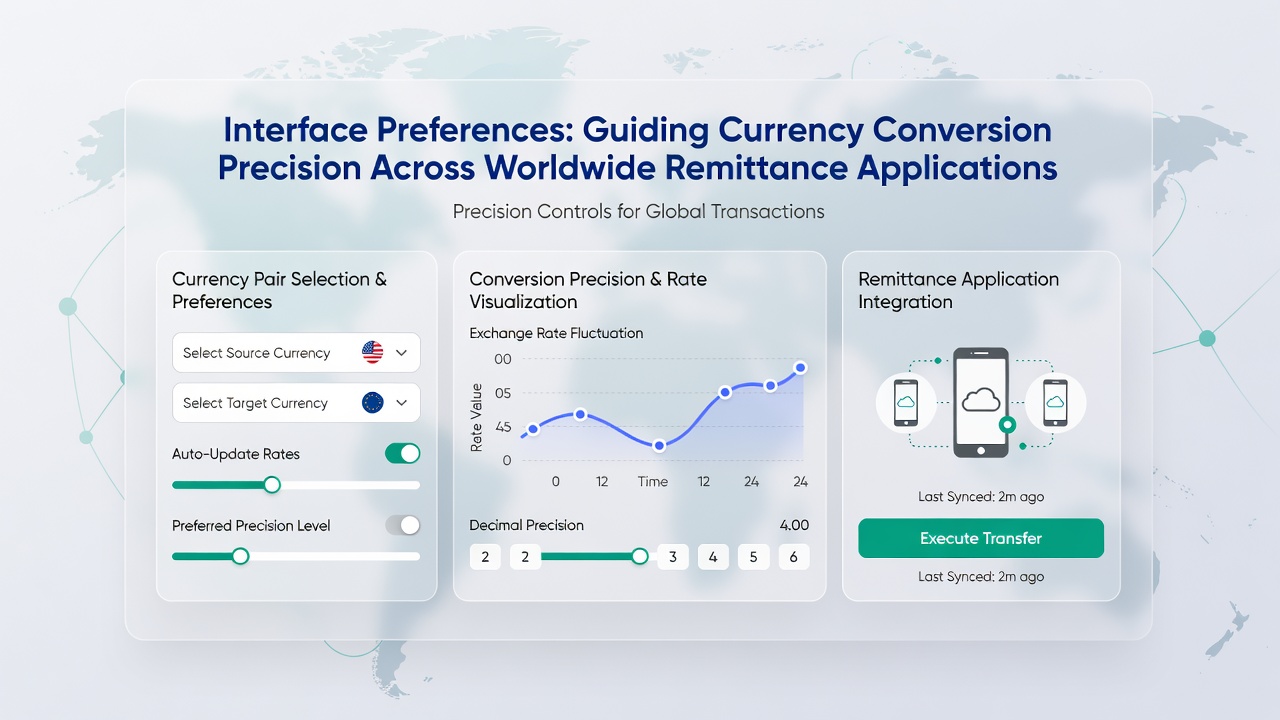
What's interesting is how notification frameworks tie into these controls. When a conversion completes, the interface can flag any automatic adjustment caused by rounding, giving users immediate visibility into the effect of their chosen settings. Platforms that link precision preferences to audit logs allow compliance teams to reconstruct exact calculation paths during regulatory reviews, a practice that gained traction following 2026 guidance from multiple oversight agencies.
Impact on Cross-Border Transaction Flows
High-volume corridors between North America and Southeast Asia demonstrate measurable differences in settlement accuracy when users enable custom precision levels. Data indicates that accounts configured for maximum decimal display experience fewer reconciliation queries because the visible amounts match the recorded values more closely. Yet systems must still enforce minimum precision floors to satisfy anti-money laundering screening tools that flag unusual fractional amounts.
One study revealed that remittance apps incorporating geolocation-based default preferences achieved faster onboarding in regions with distinct currency formatting traditions. Those who've studied this know the connection between interface design and operational oversight strengthens when preferences persist across devices through cloud-synced profiles, reducing the chance of inconsistent rounding during mobile-to-desktop transitions.
Future Developments in Preference Handling
Engineers continue refining how machine learning models predict optimal precision settings based on historical user behavior and transaction patterns. In October 2026 several providers introduced beta features that suggest decimal adjustments according to the volatility of specific currency pairs, while still requiring explicit user confirmation before applying changes. European Central Bank reports from the same timeframe noted growing interest in standardized APIs that expose precision parameters to third-party integrators without compromising core security layers.
Conclusion
Interface preferences function as direct controls over currency conversion precision in worldwide remittance applications, linking user selections to algorithmic execution and regulatory compliance. The ongoing evolution of these systems reflects coordinated efforts among developers, financial institutions, and oversight bodies to maintain accuracy across diverse global networks.