Investigating Synchronization Mechanisms Between User Configurations and Compliance Logs in Electronic Funds Transfer Platforms
Ines Wagner · Nov 21, 2026
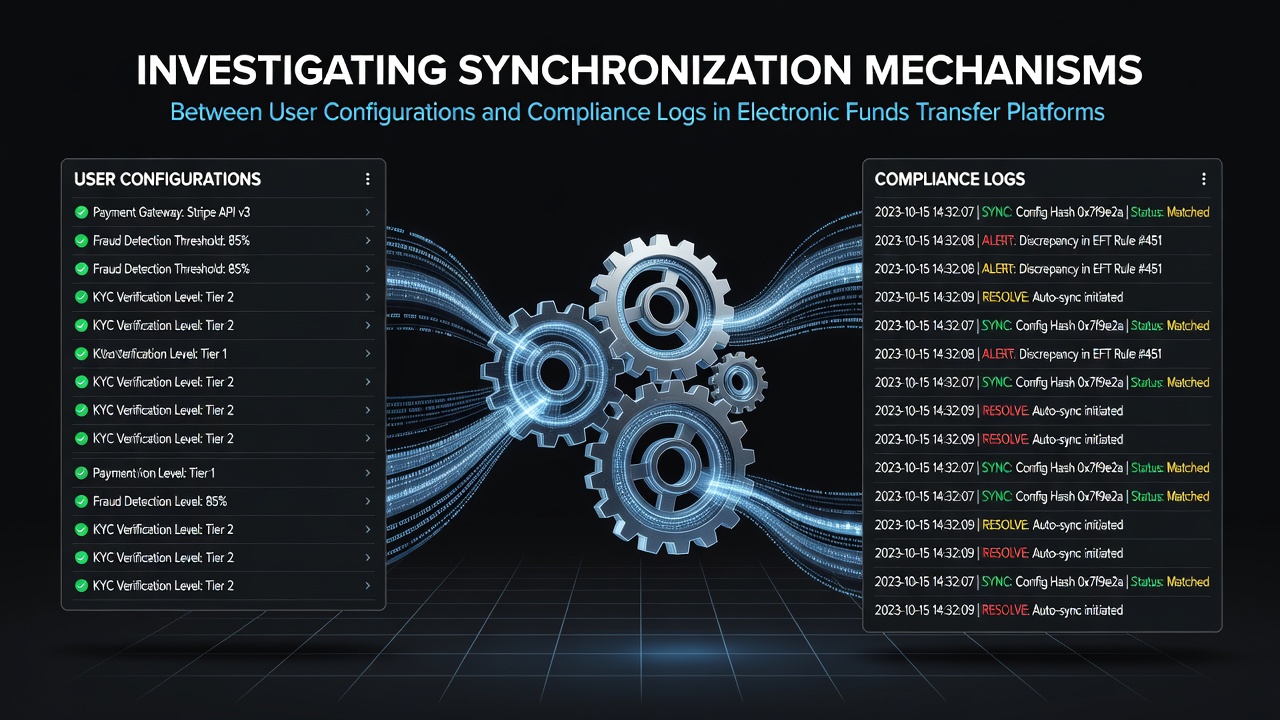
Investigating Synchronization Mechanisms Between User Configurations and Compliance Logs in Electronic Funds Transfer Platforms
Electronic funds transfer platforms rely on precise coordination between user-defined settings and regulatory record-keeping systems to maintain operational integrity. User configurations cover parameters such as transfer limits, notification preferences, and authentication methods while compliance logs capture every adjustment along with timestamps, originator details, and outcome verification. Synchronization occurs through dedicated middleware layers that propagate changes from front-end interfaces directly into immutable audit repositories.
Core Components of User Configurations
Platforms allow account holders to adjust parameters through secure dashboards that record each modification as a distinct event. These settings include recurring payment schedules, multi-factor approval chains, and regional routing preferences. When a user updates a daily transfer cap, the system generates a configuration delta that must reach the compliance engine without delay or alteration. Observers note that such updates often trigger secondary checks against predefined policy rules stored in centralized repositories.
Structure and Purpose of Compliance Logs
Compliance logs function as chronological records that document every interaction with the platform. Entries contain fields for event type, affected accounts, cryptographic hashes, and regulatory classification codes. Standards from bodies like the Bank for International Settlements require retention periods that vary by jurisdiction, with some regions mandating seven-year archives. Data shows these logs enable rapid reconstruction of transaction sequences during external reviews or internal audits.
How Synchronization Protocols Operate
Real-time synchronization employs event-driven architectures where configuration services publish messages to message queues that compliance modules consume. Protocols such as Apache Kafka or equivalent enterprise solutions ensure delivery guarantees while preserving message order. In practice, a change made in November 2026 on a European platform would propagate to logs hosted in multiple data centers within milliseconds. Researchers have documented that checksum verification and digital signatures accompany each packet to prevent tampering during transit.

Technical Challenges Encountered During Implementation
Latency spikes appear when high volumes of simultaneous configuration changes occur during peak trading hours. Database sharding strategies address scale yet introduce consistency risks that demand careful reconciliation routines. Teams managing these systems deploy conflict-resolution algorithms based on vector clocks or similar mechanisms to resolve concurrent updates. Studies from institutions such as the University of Toronto have examined how eventual consistency models perform under regulatory scrutiny in cross-border payment corridors.
Regulatory Influences on Synchronization Design
Frameworks established by the European Central Bank and the Reserve Bank of Australia shape the minimum data elements that must appear in synchronized logs. Platforms incorporate automated tagging systems that classify each configuration event according to relevant statutes. This tagging occurs at the point of capture so downstream reporting tools can generate required disclosures without manual intervention. Evidence from industry reports indicates that platforms adopting these automated classifications reduce audit preparation time significantly.
Integration with Broader Payment Ecosystems
Modern electronic funds transfer networks connect to clearing houses and correspondent banks, requiring configuration changes to cascade beyond the primary platform. Synchronization therefore extends through secure API gateways that map internal user settings to external message formats. When a user modifies an authorization threshold, the update must align with both internal logs and the formats accepted by partner institutions. Observers note successful implementations often feature simulation environments that test propagation paths before live deployment.
Security Measures Protecting the Synchronization Layer
Encryption at rest and in transit protects configuration payloads and log entries alike. Access control lists restrict which services can write to compliance repositories while read access remains limited to authorized compliance officers. Multi-party computation techniques allow verification of log integrity without exposing sensitive user data during routine checks. Platforms in the Asia-Pacific region have begun piloting hardware security modules dedicated to signing synchronization events, according to recent technical papers.
Emerging Approaches in Late 2026
Developments scheduled for rollout in November 2026 include enhanced support for zero-knowledge proofs that let platforms demonstrate compliance without revealing full configuration details. Distributed ledger technology pilots continue to explore immutable log storage that removes single points of failure. These innovations build on existing synchronization layers rather than replacing them outright. Data from ongoing trials reveals measurable improvements in both audit response speed and resistance to unauthorized modifications.
Conclusion
Synchronization between user configurations and compliance logs forms a foundational element of reliable electronic funds transfer operations. The mechanisms combine messaging systems, cryptographic safeguards, and regulatory mappings to keep records current and verifiable. Continued refinement of these processes supports expanding transaction volumes while meeting evolving oversight requirements across multiple jurisdictions.