Synchronizing Preference Panels with Encrypted Deduction Logs Across Multi-Currency Payment Platforms
Ines Hoffmann · Sep 12, 2026
Synchronizing Preference Panels with Encrypted Deduction Logs Across Multi-Currency Payment Platforms
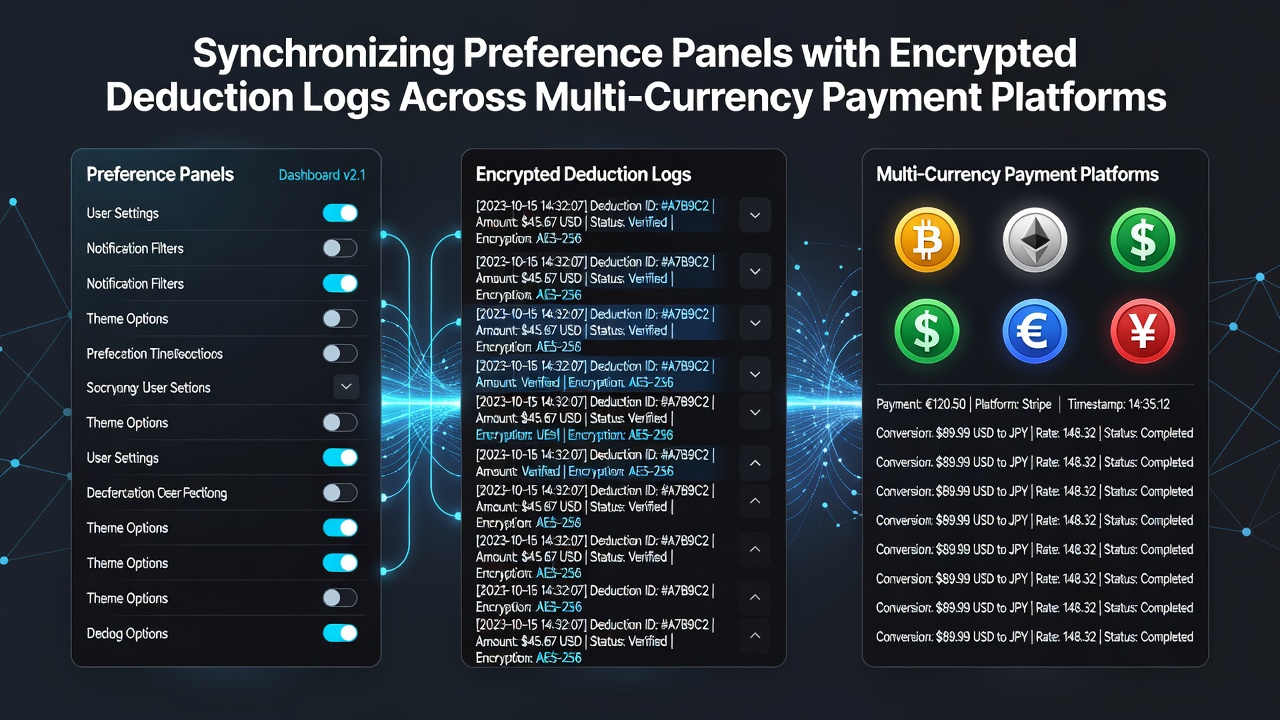
Payment platforms that handle transactions in multiple currencies rely on precise coordination between user preference panels and encrypted deduction logs to maintain accuracy across borders and time zones. These systems store settings for payment methods, currency preferences, and notification rules in centralized panels while recording every deduction in logs protected by encryption standards such as AES-256. Observers note that synchronization occurs through secure API calls that transmit hashed identifiers rather than raw data, which reduces exposure during transfers between front-end interfaces and backend databases.
Core Components of Preference Panels
Preference panels allow users to select default currencies, set recurring deduction schedules, and define thresholds for automatic conversions when exchange rates fluctuate beyond specified limits. Research from the Bank for International Settlements indicates that platforms processing over 50 currency pairs integrate these panels with real-time rate feeds from multiple sources to avoid discrepancies. Data shows that synchronization protocols update panel configurations within milliseconds of any change in deduction logs, using event-driven triggers that activate only after successful encryption and verification steps.
Encryption Standards in Deduction Logs
Deduction logs capture details including amount, timestamp, originating account, and converted equivalent in the user's preferred currency, all wrapped in layered encryption that separates metadata from sensitive values. Studies conducted by the European Central Bank highlight how tokenization further obscures recurring authorization patterns, making it difficult to reconstruct full transaction histories without corresponding keys stored in hardware security modules. Platforms operating in September 2026 adopted enhanced key rotation schedules that align with updated ISO 20022 messaging formats, ensuring logs remain compatible with regulatory reporting requirements across regions.
Synchronization Mechanisms and Protocols
Secure synchronization relies on distributed ledger techniques combined with traditional database replication to keep preference panels consistent with deduction records even during network partitions. When a deduction occurs in one currency, the system generates an encrypted entry that immediately propagates to the preference panel through a consensus protocol, which confirms that the user's chosen conversion rules and alert settings match the recorded event. Those who manage cross-border operations often discover that conflict resolution algorithms prioritize the most recent valid timestamp while discarding duplicate entries that arise from latency in high-volume environments.
Handling Multi-Currency Challenges
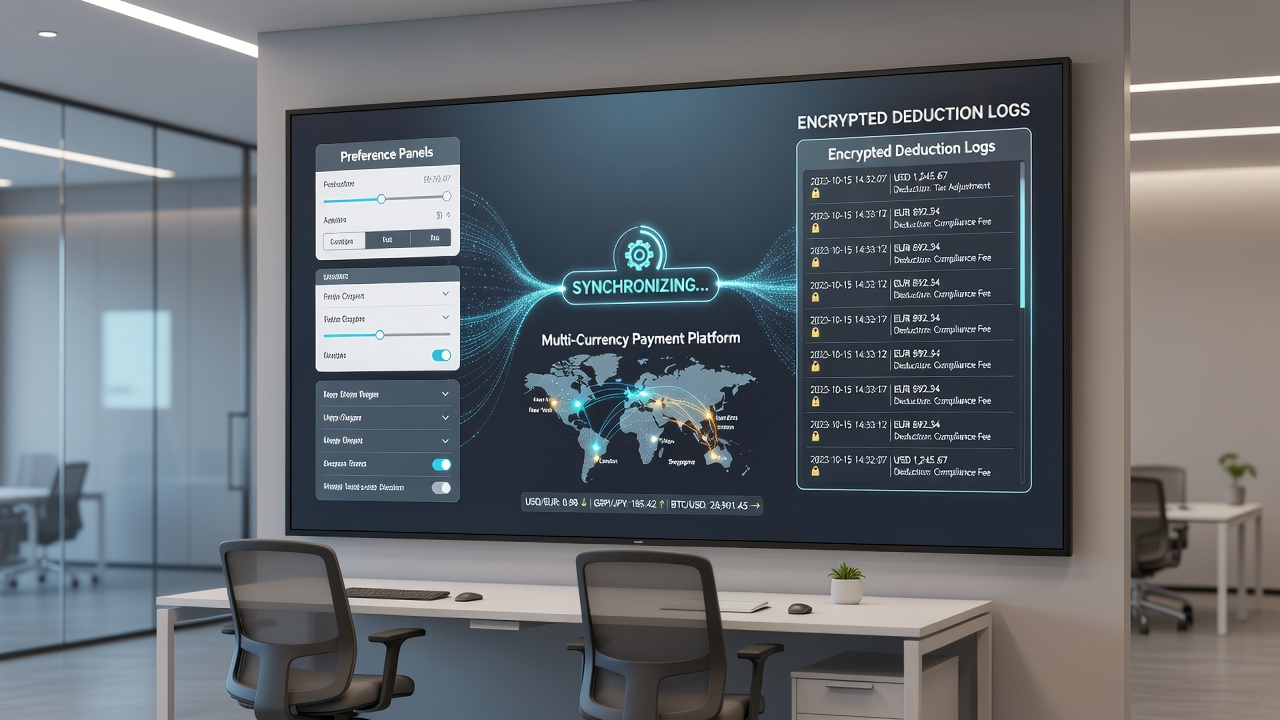
Currency conversion introduces additional complexity because exchange rates change continuously and deduction logs must preserve both original and converted amounts for audit purposes. According to reports from the Reserve Bank of Australia, platforms mitigate rounding errors by applying conversion logic at the moment of deduction and storing the precise rate alongside the encrypted payload. Preference panels then reflect these values through dynamic displays that update without requiring users to refresh their views, while background processes verify that any manual overrides remain logged with corresponding encryption hashes.
Compliance and Audit Integration
Regulatory frameworks in multiple jurisdictions require platforms to retain deduction logs for defined periods, and synchronization with preference panels supports this by embedding compliance flags directly into encrypted entries. Figures from the Bank of Canada reveal that automated reconciliation tools cross-check panel settings against log entries daily, flagging inconsistencies that could indicate configuration drift or attempted tampering. In September 2026 several operators expanded these checks to include quantum-resistant encryption algorithms in anticipation of future threats to current standards.
Operational Examples Across Platforms
One major processor handling remittances between Asia and Europe implemented a unified synchronization layer that reduced mismatch incidents by aligning user-selected notification preferences with encrypted log timestamps in under two seconds. Another case involved a North American platform that integrated biometric confirmation into preference panels, ensuring that changes to deduction schedules triggered immediate log updates protected by end-to-end encryption. Observers note these implementations demonstrate how modular architecture allows independent scaling of panel interfaces and log storage without breaking synchronization integrity.
Conclusion
Effective synchronization between preference panels and encrypted deduction logs forms a foundational element for reliable multi-currency payment operations. Platforms continue to refine these connections through protocol updates, enhanced encryption methods, and regulatory alignment that addresses evolving currency and security requirements. The result supports consistent user experiences while preserving the integrity of transaction records across diverse financial environments.